The more AI we use, the more human we need to be.
I’m sure you’ve noticed, the artificial intelligence revolution is upon us.
Now that AI is kindly offering to answer our emails, read and write our reports and organise our lives, it’s a little surprising that we’re not yet sitting with our feet up in a frictionless workplace paradise while AI does all the graft. Until then, every day seems to bring a new AI-driven technology, service or company promising to streamline, optimise, automate, accelerate and scale, and all by preferably removing costly and inefficient human effort from another part of working life.
Technology has never been more capable of connecting and helping us, yet somehow we’ve developed an extraordinary talent for using it to make everyday life more impersonal. Companies automate customer service in the name of improving the customer experience, while customers become increasingly desperate to find a telephone number and speak to somebody.
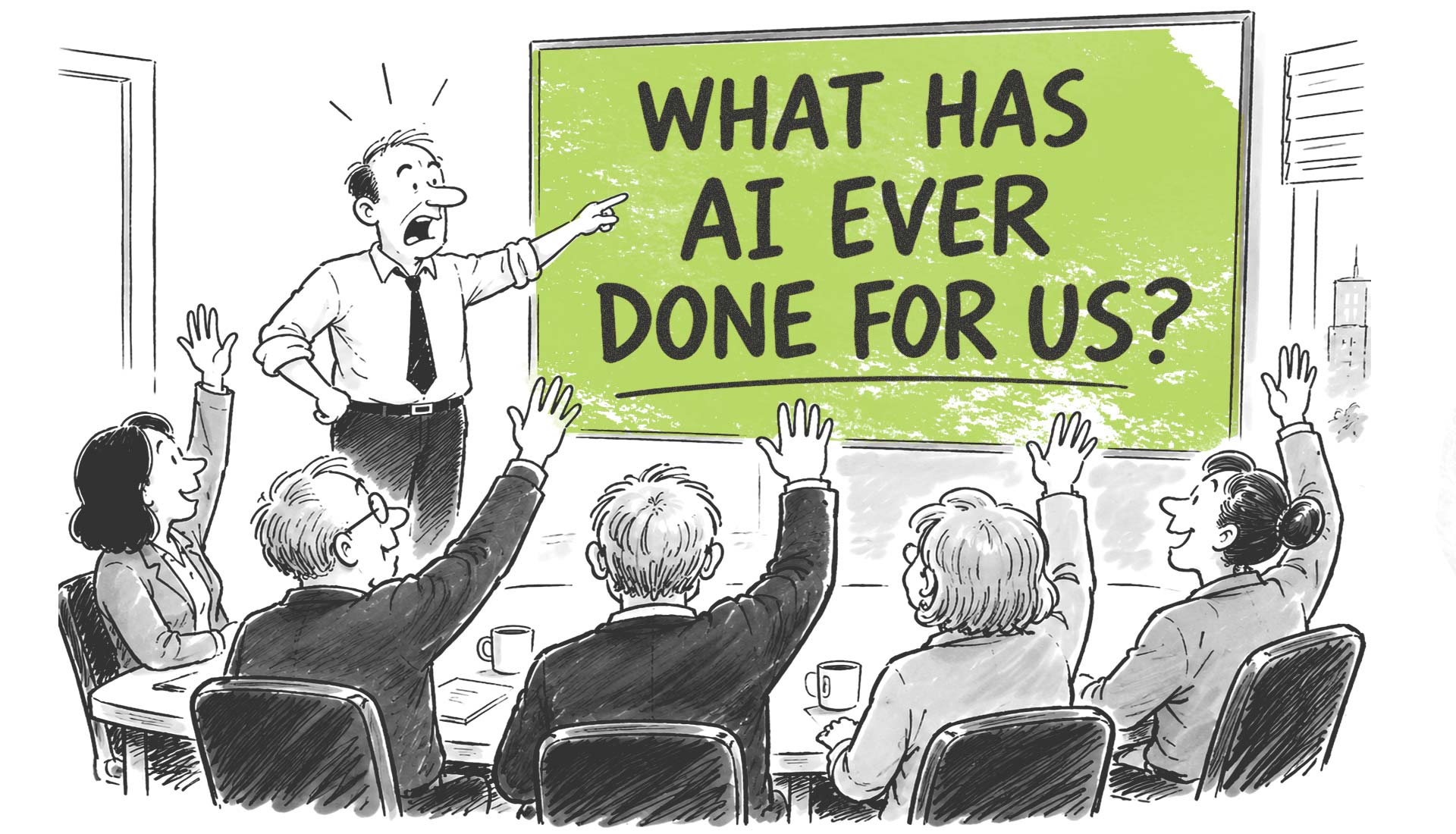
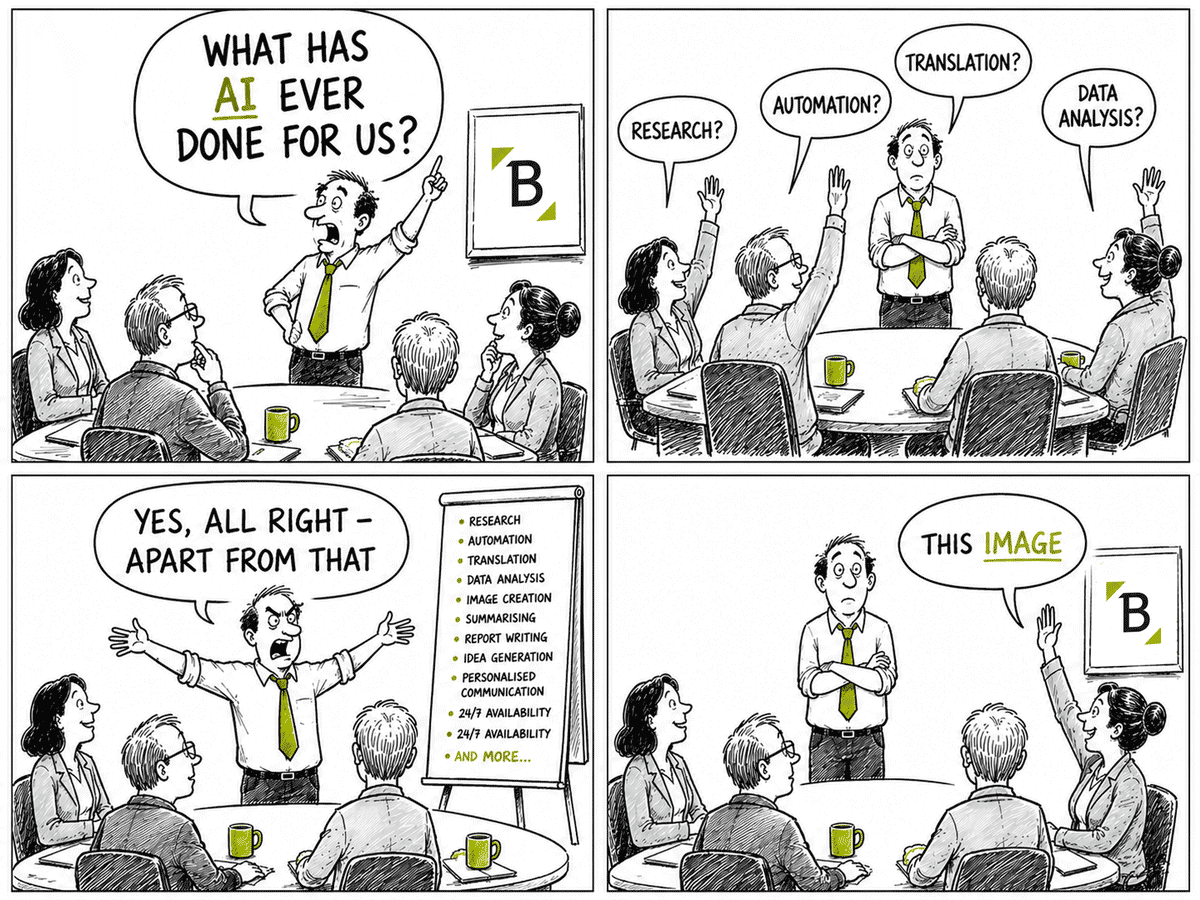
A lot of the emerging AI technology is genuinely, mind-bogglingly brilliant and we use it enthusiastically ourselves, especially for menial, time-consuming tasks and research.
AI is more than another technological fad. Around 70% of UK workers are in occupations containing tasks that AI could potentially perform or enhance. Whatever the eventual outcome, working life is likely to change significantly over the coming years. The interesting question isn’t only which jobs might be affected, but what will we continue to value humans for?
At Brandspace, we’ve spent many years working in design, branding and marketing. During that time, the channels have changed almost beyond recognition. Printed adverts became digital campaigns and social posts, brochures became websites and direct mail became email marketing.
Whilst the channels have changed, the fundamentals haven’t. Good design still requires ideas, clarity, creativity and judgement. A brand still needs to be distinctive and consistent. We still need to understand who we’re talking to, what we’re trying to say and why anybody should care.
What has changed dramatically is access to the tools. AI has made it astonishingly easy for almost anyone to produce something that resembles design. Websites can be assembled from templates. Social graphics can be generated in seconds. AI can create images, copy and ideas almost instantly, all without a designer being involved. But access to the tools isn’t the same as having the creativity to prompt the best idea, or experience to judge the output.
We could equally ask AI a legal question and receive an impressively convincing answer. We might even understand some of it. But that wouldn’t make us solicitors. Would we recognise the important omission, the unusual circumstance or the point that changes everything? Probably not. That’s why we still value professional experience and judgement.
Then there’s something rather less fashionable to talk about in an age of optimisation, automation and scaling: the very human business of caring.
We work directly with our clients and become invested in the brands entrusted to us – gradually gathering years of knowledge, not just of the product or service, but also the personality of the business and its individuals, what they care about most and the small nuances that can make all the difference to the styling or messaging in marketing communications.
We notice and question things, often agonising over tiny details because we genuinely care whether the work succeeds and sometimes ideas are based on a gut feel which can come from a strong client relationship. Intuition, personality, emotion, British humour, sarcasm and even imperfection are a just a few of the qualities that come from human involvement rather than a source of just pure algorithmic logic – these are the things that help to drive the differences between one business and another and which AI can’t quite master yet.
We suspect the same is true across other professional services, that sometimes what clients are looking for most is the reassurance that something important is being taken care of properly.
This isn’t an argument against speed, ease, productivity or progress. Businesses need to be profitable and technology has always changed how we work, but efficiency is surely a means to an end rather than the purpose of everything. As AI becomes increasingly capable, perhaps some of the qualities we value in professionals will become clearer rather than less important: experience, judgement, curiosity, responsibility and the willingness to care about what happens next.
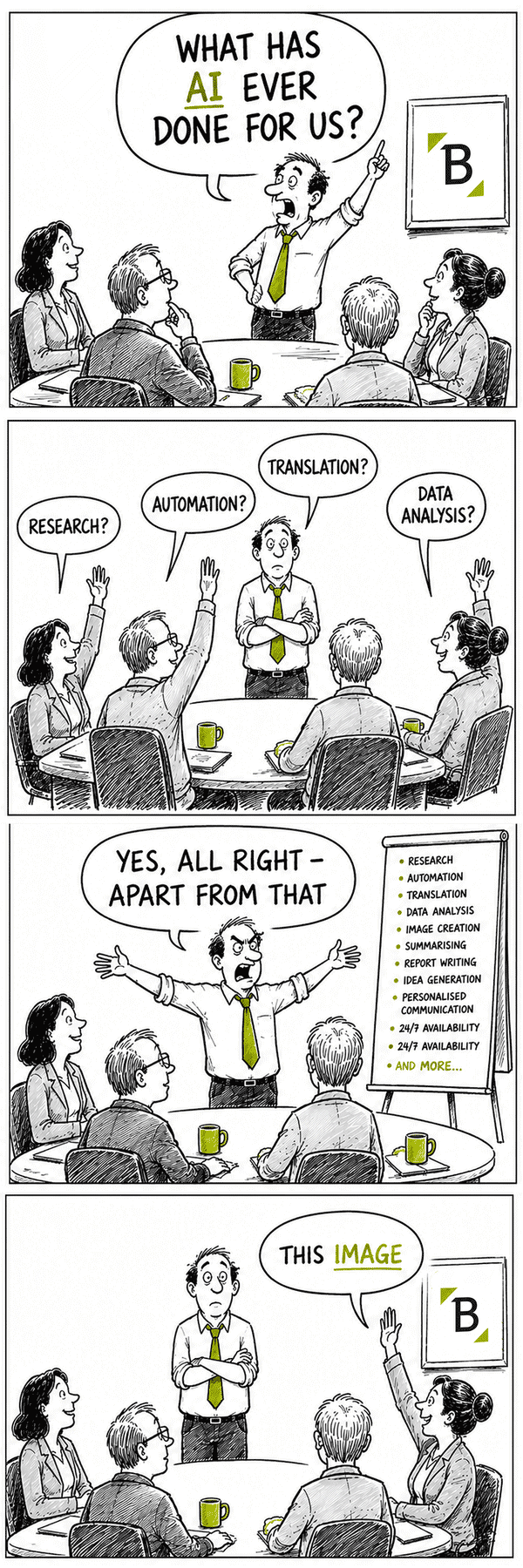
AI is already proving to be an extraordinary collaborator. It can help us research, explore, question, create and accomplish things that would previously have been beyond us. The opportunity is enormous, and we should embrace it.
But let’s not be too quick to optimise the human out of it.

If you’d like to know more about managing your brand, please contact us for a free discovery meeting: info@brandspacemedia.co.uk or call 01227 478605.